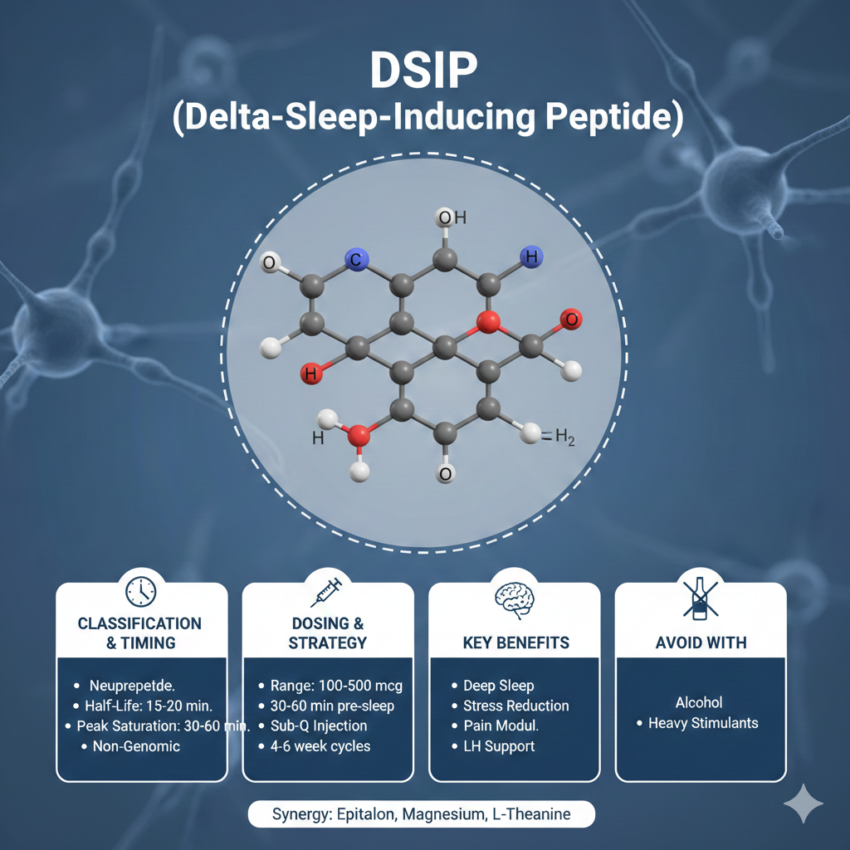
Classification & Nature
- Classification: Neuropeptide / Amphiphilic Peptide.
- Nature: A naturally occurring nonapeptide (9 amino acids) primarily found in the hypothalamus and pituitary glands.
Pharmacokinetics & Timing
- Half-Life: Approximately 15–20 minutes (extremely short), though its physiological effects on sleep architecture can persist for hours.
- Peak Saturation: Rapid; typically reaches peak concentration within 30–60 minutes post-administration.
- Detectable: Generally undetectable in standard drug panels; requires specialized peptide testing.
- Genomic vs. Non-Genomic: Primarily non-genomic. It acts as a neuromodulator, influencing neurotransmitter release and circadian rhythms rather than directly altering gene expression.
Dosing & Strategy
- General Dosing Range: 100 mcg to 500 mcg per administration.
- Strategies:
- Acute: Used 30–60 minutes before desired sleep.
- Pulse Dosing: Used only on nights of extreme stress or travel (jet lag).
- Cycle: Used 3–5 times per week to avoid potential receptor downregulation (though data on tolerance is limited).
- Administration: Subcutaneous (Sub-Q) injection.
Key Benefits
- Sleep Quality: Increases the duration and depth of Delta (slow-wave) sleep.
- Stress Management: May lower basal cortisol levels and modulate the HPA axis.
- Pain Modulation: Some evidence suggests it may assist in chronic pain management.
- Luteinizing Hormone (LH): Can help normalize LH secretion in certain contexts.
Pathways & Mechanism
- GABAergic System: Modulates GABA receptors to promote relaxation.
- Glutamatergic System: Helps reduce excitatory glutamate activity.
- Circadian Rhythm: Acts on the “master clock” in the brain to reinforce natural sleep-wake cycles.
Synergies & Improvements
- Epitalon: Often paired for comprehensive circadian rhythm and “anti-aging” protocols.
- Magnesium: Supports the relaxation of the nervous system.
- L-Theanine: Enhances the calming effect without increasing sedation.
Side Effects & Interactions
- Side Effects: Morning grogginess (if dose is too high), headaches, or slight dizziness.
- Things to Avoid: * Alcohol: Can disrupt sleep architecture and negate the benefits of deep sleep.
- Heavy Stimulants: Taking DSIP while high levels of caffeine are in the system may lead to a “wired but tired” feeling.
- Duration of Use: Generally used for 4–6 weeks followed by a break, or used “as needed” for insomnia.
General Notes & Clinical Context
DSIP is a fascinating compound because it doesn’t act like a traditional sedative or “sleeping pill.” While a sedative forces the brain into unconsciousness (often skipping the restorative stages of sleep), DSIP acts as a modulator. It encourages the brain to enter the Delta-wave state naturally. Interestingly, in clinical studies, DSIP has been shown to have little effect on those who are already sleeping well, but significant benefits for those suffering from chronic insomnia or disrupted sleep cycles.
One of the most unique aspects of DSIP is its influence on the HPA (Hypothalamic-Pituitary-Adrenal) axis. By dampening the stress response, it doesn’t just help you sleep; it helps your body recover from the physiological “tax” of a high-stress lifestyle. This makes it a popular choice for athletes or high-performance individuals who struggle to “switch off” after intense physical or mental exertion.
A word of caution: Because DSIP has such a short half-life, the timing of the dose is critical. Users often find a “sweet spot” regarding dosage; more is not always better, as excessive doses can lead to a paradoxical feeling of lethargy the following day. Always prioritize sleep hygiene (darkness, cool room temperature) alongside the use of DSIP to maximize its efficacy.