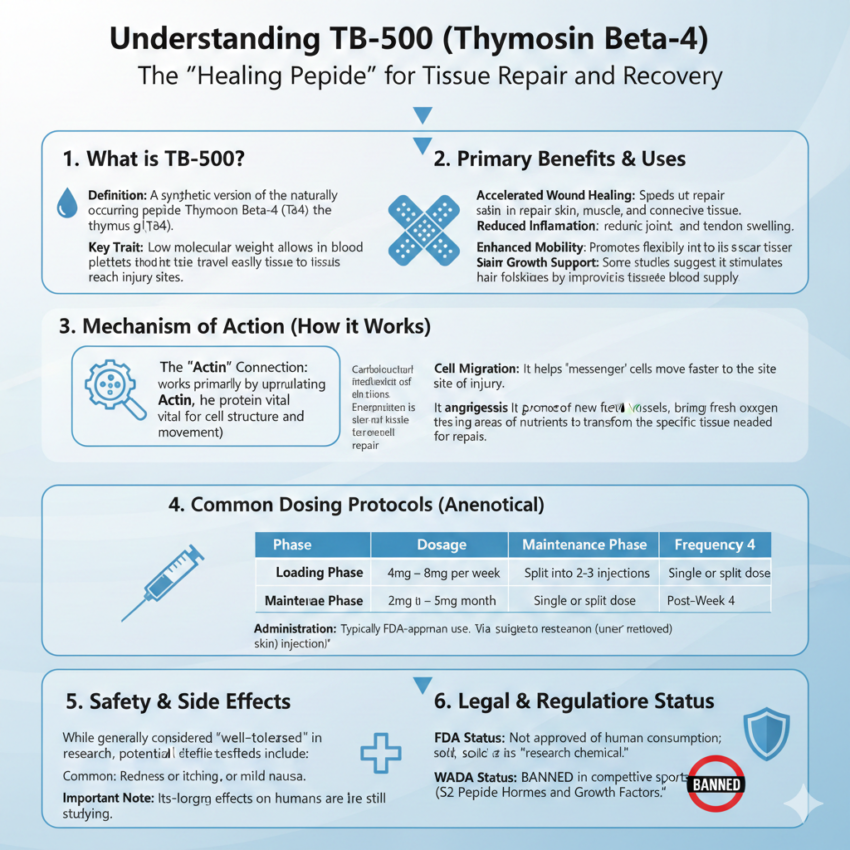
TB-500 is a synthetic version of the naturally occurring peptide Thymosin Beta-4 (Tβ4). It is primarily valued in regenerative medicine for its ability to promote cell migration, reduce inflammation, and accelerate the healing of various tissues including muscle, tendons, and ligaments.
Cheat Sheet Notes
- Classification: It is a peptide (specifically a synthetic analog of the 43-amino acid protein Thymosin Beta-4).
- General Dosing Range: * Loading Phase: 2 mg to 5 mg per week (often split into 2–3 injections).
- Maintenance Phase: 2 mg once per week or 1 mg every 2 weeks.
- Dosing Strategy: Typically administered via subcutaneous (SQ) injection. It is systemic, meaning it does not need to be injected exactly at the injury site to work, though many users prefer local administration.
- Duration of Use: Cycles usually last 4 to 8 weeks, followed by a break of equal length to avoid receptor desensitization.
- Key Benefits:
- Accelerated muscle, tendon, and ligament repair.
- Enhanced angiogenesis (formation of new blood vessels).
- Increased range of motion and reduced joint inflammation.
- Improved hair growth and skin health.
- Cardioprotective and neuroprotective properties.
- Pathways: Primarily functions through Actin Regulation (sequestering G-actin), which facilitates cellular motility and migration to injury sites.
- Genomic vs. Non-Genomic: It possesses both. It acts non-genomically via rapid actin sequestration and genomically by upregulating genes like VEGF (Vascular Endothelial Growth Factor).
- Half-Life: Relatively short, estimated between 2 to 3 days (systemic presence).
- Peak Saturation: Typically reached within 24 to 48 hours after injection.
- Detectable: Yes. It is banned by WADA (World Anti-Doping Agency) and can be detected in blood/urine for several days to weeks depending on the testing method.
- Side Effects: Generally well-tolerated. Rare reports of injection site redness, temporary lethargy, or mild “head rush” immediately after injection.
- Synergy: Often stacked with BPC-157 (the “Wolverine Stack”) for a dual-action healing effect.
- Avoid Taking With: Caution should be used with stimulants that significantly raise blood pressure or any substance that promotes uncontrolled cell growth (due to its angiogenic nature).
Understanding the Mechanism
TB-500’s magic lies in its ability to manage Actin, a vital protein for cell structure and movement. By keeping actin in a “ready-to-move” state, TB-500 allows repair cells to travel through the body more efficiently to reach the site of trauma.
The Synergy Factor
The most common “healing stack” in the peptide world is TB-500 + BPC-157.
- BPC-157 acts like a “local foreman,” building the scaffolding (collagen) and reducing immediate inflammation.
- TB-500 acts like the “logistics manager,” ensuring new blood vessels are built (angiogenesis) and moving the necessary cells into the area to finish the job.
General Notes & Precautions
While TB-500 is one of the most popular recovery peptides, it is important to remember that it is a signaling molecule. It tells your body to prioritize repair and blood vessel growth. Because it promotes angiogenesis (the creation of new blood vessels), individuals with a history of malignancy (cancer) should exercise extreme caution, as tumors often rely on angiogenesis to grow. Always consult with a healthcare professional before starting any peptide regimen.
In terms of lifestyle, TB-500 is most effective when the body is in a “repair state.” This means prioritizing high-quality sleep and adequate protein intake. While it can mask the pain of an injury by reducing inflammation, it does not magically fix a structural tear overnight; users should continue with physical therapy and avoid returning to heavy lifting too early, which could lead to re-injury.