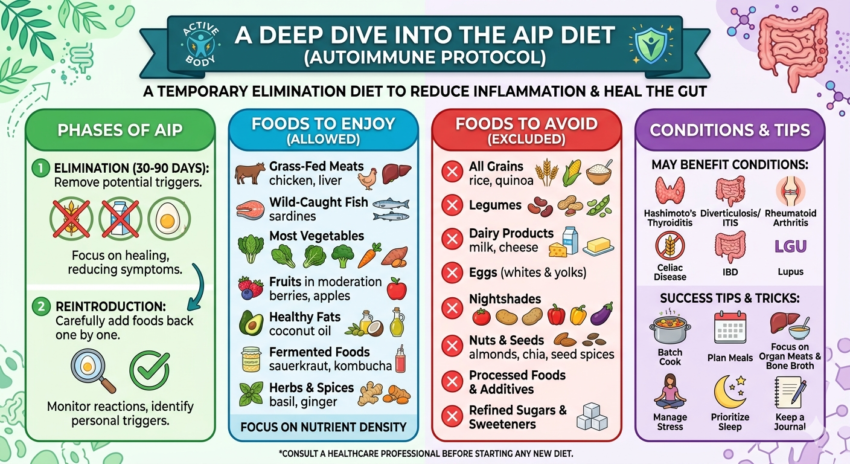
The Autoimmune Protocol (AIP) diet is a specialized, rigorous elimination diet designed to help reduce inflammation, heal the gut, and alleviate symptoms associated with autoimmune disorders. It is not intended to be a permanent lifestyle but rather a tool to identify personal food triggers. By temporarily removing foods known to potentially cause gut inflammation and immune system activation, the AIP aims to give the body a chance to repair itself.
Core Principles: How the AIP Works
The AIP operates on the premise that certain foods can contribute to “leaky gut” (increased intestinal permeability) in susceptible individuals. When the gut lining is compromised, undigested food particles and toxins can leak into the bloodstream, triggering an immune response and chronic inflammation, which can exacerbate autoimmune conditions. The AIP eliminates these potential triggers to allow the gut lining to heal and to calm the immune system.
The Phases of the AIP Diet
The AIP diet consists of two main phases:
Phase 1: The Elimination Phase
During this phase, all potentially inflammatory and immune-triggering foods are strictly removed from the diet. This phase typically lasts for 30 to 90 days, or until you experience a noticeable and sustained improvement in your symptoms. The goal is to reach a baseline of health where you feel significantly better before moving to the next phase. It is essential to be extremely strict during this phase to accurately identify triggers later.
Phase 2: The Reintroduction Phase
Once you have experienced significant symptom improvement, you can begin to carefully reintroduce the eliminated foods, one at a time. This process helps you determine which foods your body tolerates and which ones cause a reaction.
Reintroduction Process:
- Choose a single food to reintroduce (e.g., egg yolks, not whole eggs).
- Eat a small amount on a “testing day,” perhaps a few times throughout the day.
- Strictly avoid that food and other new foods for 5 to 7 days.
- Monitor your symptoms closely during this period for any signs of a reaction (e.g., digestive issues, joint pain, skin breakouts, fatigue).
- If no reaction occurs: You can fully reintroduce that food into your diet.
- If a reaction occurs: You now know this food is a potential trigger and should be avoided for the time being. Wait until you are symptom-free again before testing the next food.
- Order of Reintroduction: Generally, start with foods considered less likely to be problematic (e.g., egg yolks, seed-based spices, fruit/berry-based spices) and save highly potentially reactive foods (e.g., dairy, grains, nightshades) for last.
Conditions That May Benefit from the AIP Diet
The AIP diet is primarily designed for individuals with autoimmune diseases, where the immune system mistakenly attacks the body’s own tissues.
Hashimoto’s Thyroiditis and Hypothyroidism
Hashimoto’s is an autoimmune condition where the immune system attacks the thyroid gland, often leading to hypothyroidism (underactive thyroid). Symptoms include fatigue, weight gain, brain fog, and sensitivity to cold.
- AIP and Hashimoto’s: Small studies and anecdotal reports suggest the AIP can help reduce thyroid antibodies, improve thyroid function, and alleviate symptoms, enhancing the quality of life for many patients. Lifestyle factors like sleep and stress management are also crucial for Hashimoto’s.
Diverticulosis and Diverticulitis
Diverticulosis is a condition where small pouches (diverticula) form in the wall of the colon. These pouches are usually harmless unless they become inflamed or infected, a condition known as diverticulitis.
- AIP and Diverticulosis/Diverticulitis: While not a classical autoimmune disease, diverticulitis involves significant inflammation of the gut. The AIP’s focus on healing the gut lining, balancing the microbiome, and eliminating common inflammatory foods (like grains and processed sugars) can be beneficial. It may help prevent future flare-ups (diverticulitis) by reducing overall gut inflammation and identifying specific food irritants, though scientific evidence for this specific application is currently more limited than for autoimmune conditions.
Other Autoimmune Conditions
The AIP is often used for a wide range of autoimmune disorders, including:
- Inflammatory Bowel Disease (IBD): Crohn’s disease and ulcerative colitis.
- Rheumatoid Arthritis (RA)
- Celiac Disease
- Lupus (Systemic Lupus Erythematosus)
- Multiple Sclerosis (MS)
- Psoriasis and Psoriatic Arthritis
- Sjögren’s Syndrome
Limited evidence from small studies suggests improvements in quality of life and reduced symptoms for IBD and Hashimoto’s, but larger, controlled studies are needed to confirm these findings.
Comprehensive AIP Food Lists
This list pertains to the strict Elimination Phase. Always check labels carefully for hidden ingredients.
Foods to Enjoy (AIP-Allowed)
Focus on nutrient-dense, whole foods during the elimination phase.
| Food Group | Examples to Include |
| Meats & Poultry (Preferably grass-fed, pasture-raised) | Beef, bison, chicken, duck, lamb, pork, turkey, wild game (venison, etc.), Organ meats (liver, heart, kidney, tongue – highly encouraged), Fowl |
| Seafood (Preferably wild-caught) | Anchovies, catfish, cod, halibut, herring, mackerel, mahi-mahi, salmon, sardines, snapper, tilapia, trout, tuna |
| Vegetables (A wide variety, except nightshades) | Leafy greens (kale, spinach, lettuce, arugula), cruciferous vegetables (broccoli, cauliflower, Brussels sprouts, bok choy), root vegetables & tubers (sweet potatoes, yams, carrots, beets, taro, parsnips), zucchini, cucumber, asparagus, celery, onions, garlic, ginger |
| Fruits (Fresh, in moderation, e.g., 1-2 servings/day) | Berries (blueberries, strawberries, raspberries), apples, pears, peaches, bananas, melon, citrus (lemons, limes), grapes |
| Healthy Fats & Oils | Avocado and avocado oil, coconut oil, coconut milk, coconut butter, olive oil, lard, beef tallow, duck fat (animal fats from well-raised animals) |
| Herbs & Spices (Non-seed based) | Basil, bay leaf, cilantro, dill, garlic, ginger, oregano, parsley, rosemary, sage, salt, thyme, turmeric, saffron |
| Fermented Foods (Non-dairy) | Coconut yogurt, coconut kefir, kimchi (without nightshades/peppers), sauerkraut, pickles (without nightshades/sugar), kombucha |
| Beverages | Water, herbal teas (non-seed/grain based), bone broth, coconut milk, coconut water |
| Flours & Thickeners (AIP-compliant alternatives) | Arrowroot starch, cassava flour, coconut flour, plantain flour, sweet potato flour, tapioca starch |
| Sweeteners (Occasional, minimal use) | Honey, maple syrup, dates (in moderation) |
| Other | Bone broth, collagen/gelatin, non-dairy fermented foods, olives, plantain chips |
Foods to Avoid (AIP-Excluded)
These foods are strictly eliminated during Phase 1.
| Food Group | Examples to Avoid |
| Grains (Gluten & gluten-free) | Wheat, barley, rye, spelt, kamut, oats, corn, rice, quinoa, amaranth, buckwheat, millet, sorghum, teff |
| Legumes | Beans (black, kidney, garbanzo, etc.), lentils, peas, peanuts (and peanut butter), soy (tofu, tempeh, edamame), green beans |
| Dairy | Milk (cow, goat, sheep), cheese, yogurt, butter, cream, ghee (at first), ice cream, dairy-based protein powders |
| Eggs | Whole eggs, egg whites, foods containing eggs (as ingredients or in baked goods) |
| Nightshade Vegetables & Spices | Tomatoes, potatoes (except sweet potatoes/yams), eggplants, peppers (bell, chili, jalapeno, cayenne, pimiento), tomatillos, cayenne, paprika, chili powder, red pepper flakes |
| Nuts & Seeds | All tree nuts (almonds, walnuts, cashews, etc.), seeds (chia, flax, sesame, sunflower, pumpkin, etc.), all nut/seed flours and butters, all nut/seed oils (except coconut and avocado, which are fruits) |
| Certain Spices (Seed-based) | Anise, celery seed, coriander, cumin, dill seed, fennel, mustard, nutmeg, star anise |
| Seed & Processed Oils | Canola, soybean, sunflower, safflower, corn, peanut, cottonseed, rapeseed, palm kernel oils |
| Refined/Processed Sugars & Sweeteners | Cane sugar, beet sugar, corn syrup, brown rice syrup, barley malt syrup, agave nectar, artificial sweeteners (aspartame, sucralose, xylitol, mannitol) |
| Food Additives & Preservatives | Thickening agents (guar gum, carrageenan, xanthan gum), emulsifiers, food colorings, flavorings, industrial ingredients |
| Certain Beverages | Alcohol, coffee (including decaf), cocoa/chocolate |
| Other | Algae/seaweed (some protocols allow minor use, others exclude), non-steroidal anti-inflammatory drugs (NSAIDs) (ibuprofen, aspirin – check with doctor first), processed foods, tobacco |
Essential Tips and Tricks for AIP Success
Following the AIP requires planning and commitment.
- Preparation is Key:
- Stock your pantry with AIP-compliant staples (cassava flour, coconut oil, herbs, safe snacks like plantain chips).
- Batch cooking: Prepare large quantities of meat, roasted vegetables, and soups on weekends. Freeze individual portions for quick meals during the week. This is a crucial strategy.
- Plan your meals in advance to avoid last-minute, non-compliant choices when hungry. Focus on simple, straightforward meals first to build confidence.
- Focus on Nutrient Density:
- Think about what you can eat. Build your plate with a protein source, several portions of vegetables, and a healthy fat.
- Prioritize organ meats (highly nutrient-dense), bone broth (gut-healing collagen), and a wide variety of colorful vegetables for essential vitamins, minerals, and phytonutrients.
- Anticipate Cravings and Withdrawal:
- Be prepared for sugar or caffeine withdrawal symptoms, which can affect your mood and energy initially.
- Have AIP-approved treats or comforting foods readily available to manage cravings without feeling deprived (e.g., berries with coconut butter, homemade cinnamon applesauce, compliant beef jerky).
- Simplify Eating Out:
- Stick to restaurants that emphasize whole foods (e.g., steakhouses).
- Request modifications politely but specifically: Ask for meat to be grilled or steamed without butter, sauces, or marinades. Ask for vegetables to be steamed without seasoning.
- Swap ingredients: Ask for extra vegetables or avocado instead of grains, dairy, or legumes.
- Bring your own AIP-compliant condiments like olive oil, avocado oil, or coconut aminos.
- Listen to Your Body and Keep a Journal:
- Maintain a detailed food and symptom journal. Record what you eat and drink, your physical symptoms, energy levels, and even your mood.
- This is especially critical during the Reintroduction Phase to accurately track reactions and identify triggers.
- Don’t Ignore Lifestyle Factors:
- Diet is only one part of the equation. Prioritize adequate sleep (7-9 hours), manage stress (through mindfulness, yoga, or relaxation techniques), and incorporate regular, appropriate movement. These factors significantly influence immune function and gut health.
The AIP diet is a powerful self-discovery tool that can lead to significant health improvements. Approach it with patience, preparation, and a commitment to understanding your body’s unique needs. Consultation with a healthcare provider or registered dietitian experienced with the AIP can be very beneficial for guidance and support.