Nicotinamide Adenine Dinucleotide (NAD+) is a critical coenzyme found in every living cell. It is the “golden molecule” of cellular energy and repair, acting as a shuttle for electrons in the metabolic process.
Core Classification & Nature
- Classification: It is a coenzyme (specifically a dinucleotide), not a peptide.
- Biological Role: Acts as a critical cofactor for enzymes like SIRT1 (longevity genes) and PARPs (DNA repair).
Dosing Range & Strategies
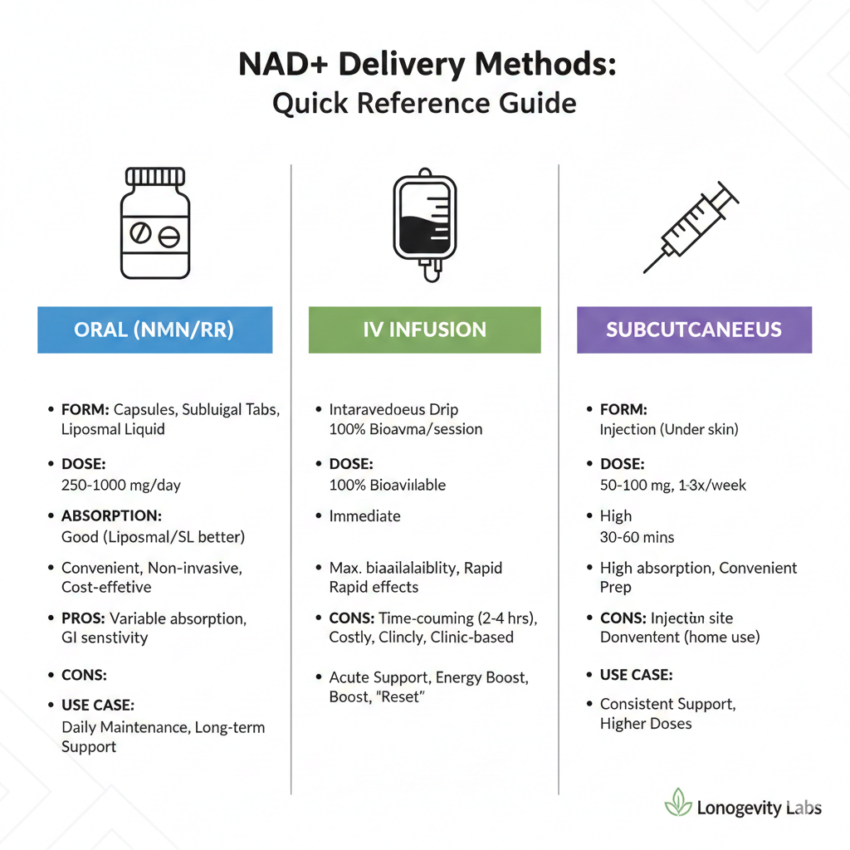
- Oral (Precursors like NMN/NR): Typically 250mg – 1,000mg daily.
- Sublingual/Liposomal: Often 125mg – 500mg due to higher bioavailability.
- IV Infusion: 250mg – 1,000mg per session, administered slowly (2–4 hours).
- Subcutaneous (Injection): 50mg – 100mg 1–3 times per week.
- Strategy: Start low and titrate up to assess “flushing” or GI sensitivity.
Pharmacokinetics & Timing
- Half-life: Very short in the blood (approx. 2–15 minutes), but its effects on intracellular pools last much longer.
- Peak Saturation: Peak plasma levels usually occur within 30–60 minutes post-ingestion or injection.
- Detectability: Measurable via specialized intracellular NAD+ blood tests (e.g., Jinfiniti or TruDiagnostic).
Mechanisms & Pathways
- Pathways: Primarily involves the Salvage Pathway (recycling NAM/NMN) and the De Novo Pathway (synthesis from Tryptophan).
- Genomic vs. Non-Genomic: * Genomic: Influences gene expression by activating Sirtuins.
- Non-Genomic: Directly drives the Electron Transport Chain (ETC) for ATP production.
Key Benefits
- Energy Production: Essential for converting nutrients into ATP.
- DNA Repair: Fuels PARP enzymes to fix damaged genetic material.
- Circadian Rhythm: Helps regulate the body’s internal clock.
- Neuroprotection: Supports cognitive function and reduces neuroinflammation.
Synergies & Enhancements
- Resveratrol/Pterostilbene: Acts as a Sirtuin activator (the “fuel” vs. the “pedal”).
- TMG (Trimethylglycine): Often recommended to replenish methyl groups used during NAD+ metabolism.
- CD38 Inhibitors (Apigenin/Quercetin): Prevents the “theft” of NAD+ by the CD38 enzyme, which increases with age.
Side Effects & Contraindications
- Common: Nausea, fatigue, headaches, or “heavy chest” sensation during rapid IV infusion.
- To Avoid: High doses of Nicotinamide (NAM), which can actually inhibit Sirtuins at high levels.
- Avoid With: Active cancer (theoretical concern, as NAD+ supports all cellular growth, including malignant cells; consult an oncologist).
Duration of Use
- Cycle: Often used for 8–12 weeks followed by a break, or indefinitely at lower maintenance doses.
General Knowledge Notes
NAD+ is essentially the “currency” of your mitochondria. As we age, our levels naturally decline by about 50% every 20 years, leading to what scientists call “inflammaging.” While the body can produce its own NAD+, the demand for DNA repair and cellular maintenance eventually outstrips the supply. This is why supplementation—whether through precursors like NMN or direct methods like IV therapy—has become a cornerstone of modern longevity protocols.
It is important to remember that NAD+ is not a “stimulant” in the traditional sense, though many users report increased mental clarity and physical energy. Its work is foundational and structural. Think of it as restoring the power grid of a city rather than just turning on a single lightbulb. Because it plays a role in so many systems, the benefits are often felt systemically rather than in one specific area.
Finally, the “Methylation Support” aspect is crucial. When your body processes NAD+, it produces waste products that require methyl groups to be cleared out. If you are a “poor methylator” or taking high doses of NAD+ without TMG, you might feel a “crash” or increased irritability. Always pair your protocol with a methylation donor to keep the cellular machinery running smoothly.