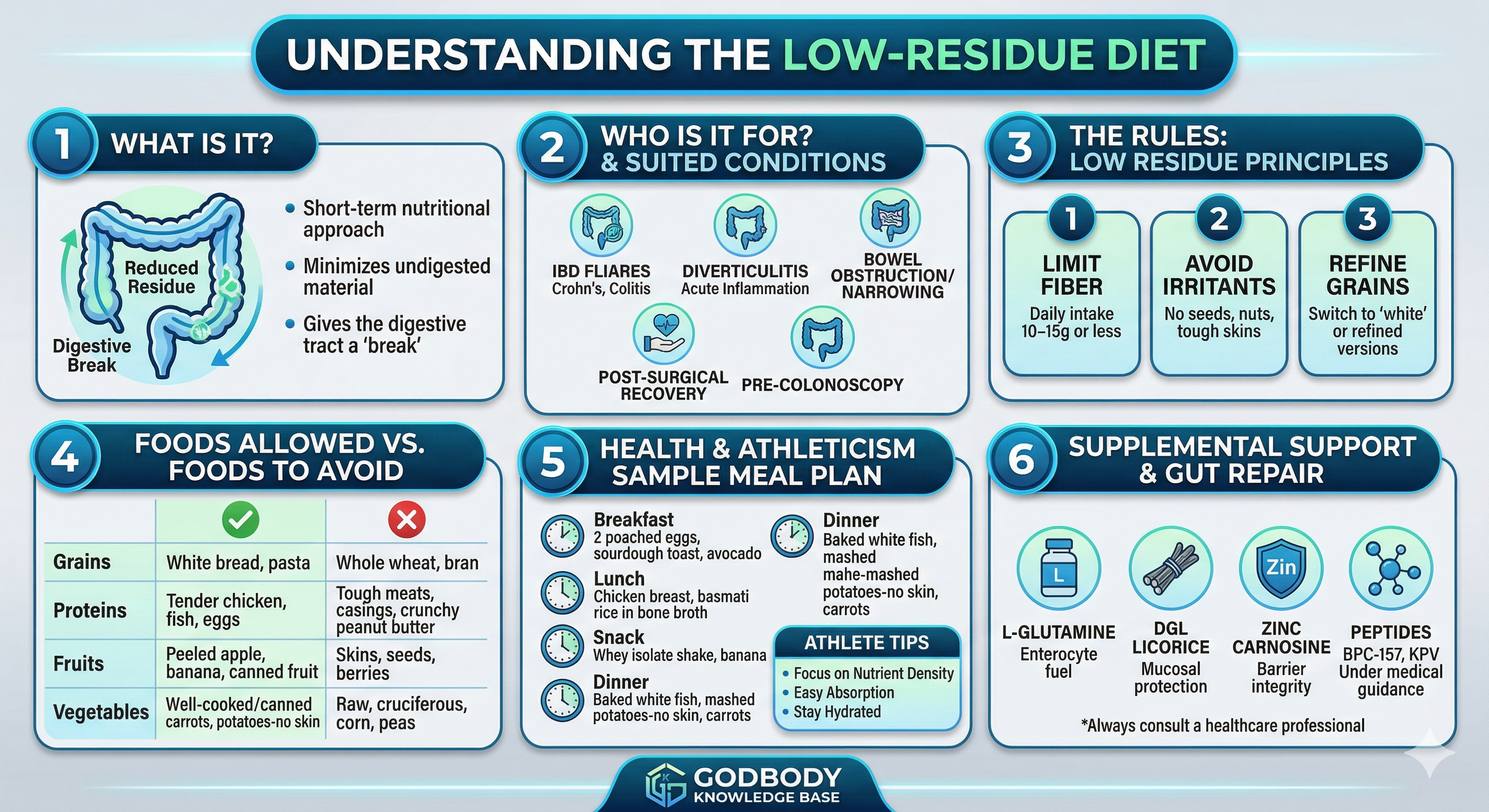
A Low-Residue Diet is a specialized nutritional approach designed to reduce the frequency and volume of stools. The primary goal is to give the digestive tract a “break” by minimizing the amount of undigested material (residue) passing through the large intestine.
While often confused with a “low-fiber” diet, a low-residue diet is slightly more restrictive, limiting not just fiber but also certain foods that can stimulate bowel contractions.
Who Is It For?
This diet is typically a short-term therapeutic intervention. It is not intended for long-term use because it lacks the diverse fiber needed for a healthy gut microbiome. It is best suited for individuals dealing with:
- Inflammatory Bowel Disease (IBD): Specifically during “flares” of Crohn’s disease or Ulcerative Colitis.
- Diverticulitis: During acute inflammation to prevent irritation.
- Bowel Obstruction or Narrowing (Strictures): To prevent blockages.
- Post-Surgical Recovery: Common after bowel surgery or a perforated bowel repair to allow the site to heal.
- Pre-Colonoscopy: Often used as part of the preparation process.
The Rules of Engagement
To successfully follow a low-residue protocol, you must adhere to three main pillars:
- Limit Fiber: Keep total daily fiber intake to 10–15 grams or less.
- Avoid Irritants: Eliminate seeds, nuts, and tough skins that the body cannot break down.
- Refine Your Grains: Switch from whole-wheat and multigrain products to “white” or refined versions.
Foods Allowed vs. Foods to Avoid
| Category | Allowed (Low Residue) | Avoid (High Residue) |
| Grains | White bread, white rice, refined pasta, Cream of Wheat. | Whole wheat, bran, brown rice, quinoa, popcorn. |
| Proteins | Tender, well-cooked meats (chicken, fish, lean beef), eggs, tofu. | Tough/gristly meats, processed meats with casings, crunchy peanut butter. |
| Fruits | Peeled apples/pears, bananas, melons, canned fruit (no skin). | Raw fruits with skins/seeds (berries, figs), dried fruit. |
| Vegetables | Well-cooked/canned carrots, potatoes (no skin), strained juices. | Raw vegetables, cruciferous (broccoli, cabbage), corn, peas. |
| Dairy | Milk, yogurt (no fruit bits), mild cheeses (in moderation). | Cheeses with nuts/seeds/fruit. |
Sample Diet for Athleticism and Health
Maintaining performance on a low-residue diet can be tricky because you lose many “clean” complex carbs. The key is focusing on nutrient density and easy absorption.
- Breakfast: Two poached eggs on toasted white sourdough with a small amount of smooth avocado.
- Mid-Morning Snack: Greek yogurt (plain/strained) with half a peeled, ripe banana.
- Lunch: Shredded chicken breast with white basmati rice cooked in bone broth (for extra collagen and minerals).
- Pre-Workout: A scoop of high-quality whey protein isolate mixed with water or rice milk.
- Dinner: Baked white fish (like cod or tilapia) with well-cooked, peeled carrots and mashed potatoes (no skin).
- Evening: A small serving of cottage cheese or a glycine supplement to support gut lining repair.
Supplementing Recovery: Gut Integrity & Inflammation Management
When navigating a low-residue diet, the goal is often more than just “lowering fiber”—it’s about actively repairing the intestinal lining and calming systemic inflammation. For those looking to optimize their recovery, combining dietary restrictions with targeted supplementation can accelerate the healing process.
Key Peptides for Gut Repair
Peptides are short chains of amino acids that act as signaling molecules. In the context of digestive health, two stand out for their ability to promote tissue repair:
- BPC-157 (Body Protection Compound): Often considered the “gold standard” for gut health. Derived from a protein found in human gastric juice, BPC-157 has been shown to accelerate the healing of the GI tract, including the repair of a perforated bowel or “leaky gut.” It works by promoting angiogenesis (the formation of new blood vessels) and modulating the body’s inflammatory response.
- KPV (Lysine-Proline-Valine): A potent anti-inflammatory peptide. KPV is a C-terminal fragment of alpha-MSH, and it is highly effective at reducing inflammation specifically within the large intestine. It can be taken orally in a stable form, making it a convenient addition to a low-residue protocol.
Supplemental Support for Digestive Health
Because a low-residue diet can be nutritionally narrow, certain supplements can fill the gaps while providing direct benefits to the gut:
| Supplement | Primary Benefit | Why Use It on Low-Residue? |
| L-Glutamine | Fuel for Enterocytes | The primary energy source for the cells lining your small intestine; vital for maintaining the gut barrier. |
| Deglycyrrhizinated Licorice (DGL) | Mucosal Protection | Helps soothe the lining of the stomach and intestines by increasing mucus production without raising blood pressure. |
| Zinc Carnosine | Barrier Integrity | A specific form of zinc that stays in the gut longer to help repair the mucosal lining and tighten “leaky” junctions. |
| Quercetin | Mast Cell Stabilizer | Helps manage the inflammatory “histamine” response that can occur during flares or after digestive trauma. |
Managing Systemic Inflammation
If the need for a low-residue diet stems from a systemic issue like IBD or recovery from surgery, managing total body inflammation is crucial.
- Omega-3 Fatty Acids (High EPA): Helps dampen the production of inflammatory cytokines. Ensure you use a high-quality, molecularly distilled oil to avoid digestive upset.
- Curcumin (With Enhanced Absorption): A natural anti-inflammatory that can be as effective as some NSAIDs without the harsh impact on the stomach lining.
- Probiotics (Post-Flare): While often avoided during the acute “low-residue” phase, specific strains (like Saccharomyces boulardii) can be introduced once solid foods are tolerated to rebuild a healthy microbiome.
Implementation Strategy
For those in a “repair” phase, consistency is key. Supplements and peptides should be introduced one at a time to monitor for any digestive sensitivity.
Note: Because a low-residue diet is often used after major medical events (like surgery or severe flares), it is essential to coordinate these protocols with a healthcare professional to ensure they don’t interfere with prescribed medications or post-op recovery.
Frequently Asked Questions: Navigating the Low-Residue Diet
This FAQ is designed to help you transition smoothly into a low-residue protocol while maintaining their fitness goals and managing recovery.
Q: How long should I stay on a low-residue diet? A: This is typically a short-term intervention (usually 2–6 weeks). It is designed to allow the gut to heal from inflammation or surgery. Once symptoms subside or your healthcare provider gives the green light, you should slowly reintroduce fiber to support long-term gut microbiome health.
Q: Can I still exercise while on this diet? A: Yes, but listen to your body. Since you are limited to refined carbohydrates and may have reduced caloric intake, your explosive energy might be lower. Focus on low-to-moderate intensity work (walking, light lifting) until your energy stabilizes. If you are recovering from surgery, follow your surgeon’s specific activity restrictions first.
Q: Will I get enough nutrients without whole grains and raw vegetables? A: In the short term, yes. However, because you are missing out on certain phytonutrients and antioxidants, it is often helpful to supplement with a high-quality multivitamin or specific minerals like Magnesium and Zinc, which are easily absorbed.
Q: Is “Low-Fiber” the same as “Low-Residue”? A: Not quite. All low-residue diets are low-fiber, but low-residue goes a step further by also restricting foods that increase bowel activity, such as dairy (for some) and certain types of tough meats. It is the most restrictive version of a digestive rest diet.
Q: Can I drink coffee or caffeine? A: This depends on your sensitivity. Caffeine is a GI stimulant, which can cause the bowels to contract—the opposite of “rest.” If you are in an active flare or post-surgery, it’s best to stick to water, herbal teas (like peppermint or chamomile), or bone broth.
Q: What is the best way to reintroduce “normal” foods? A: The “Low and Slow” method. Introduce one high-fiber food every 2–3 days. Start with small servings of well-cooked vegetables (like peeled zucchini) before moving to raw greens or beans. If cramping or bloating returns, scale back for a few days.
Q: Are there any “hidden” high-residue foods I should watch out for? A: Yes! Watch out for:
- Fruit yogurts: These often contain small seeds or skins.
- Smoothies: Unless they are strained, they often contain “pulp” residue.
- Crunchy Nut Butters: Always choose “Creamy” or “Smooth” versions.
- Spices: Avoid whole peppercorns or red pepper flakes; stick to ground powders.
Pro-Tip
If you are using this diet alongside a peptide protocol (like BPC-157), ensure you are staying hyper-hydrated. Low-residue diets can sometimes lead to constipation in some individuals due to the lack of bulk; drinking 2.5–3 liters of water daily is essential for keeping things moving smoothly.