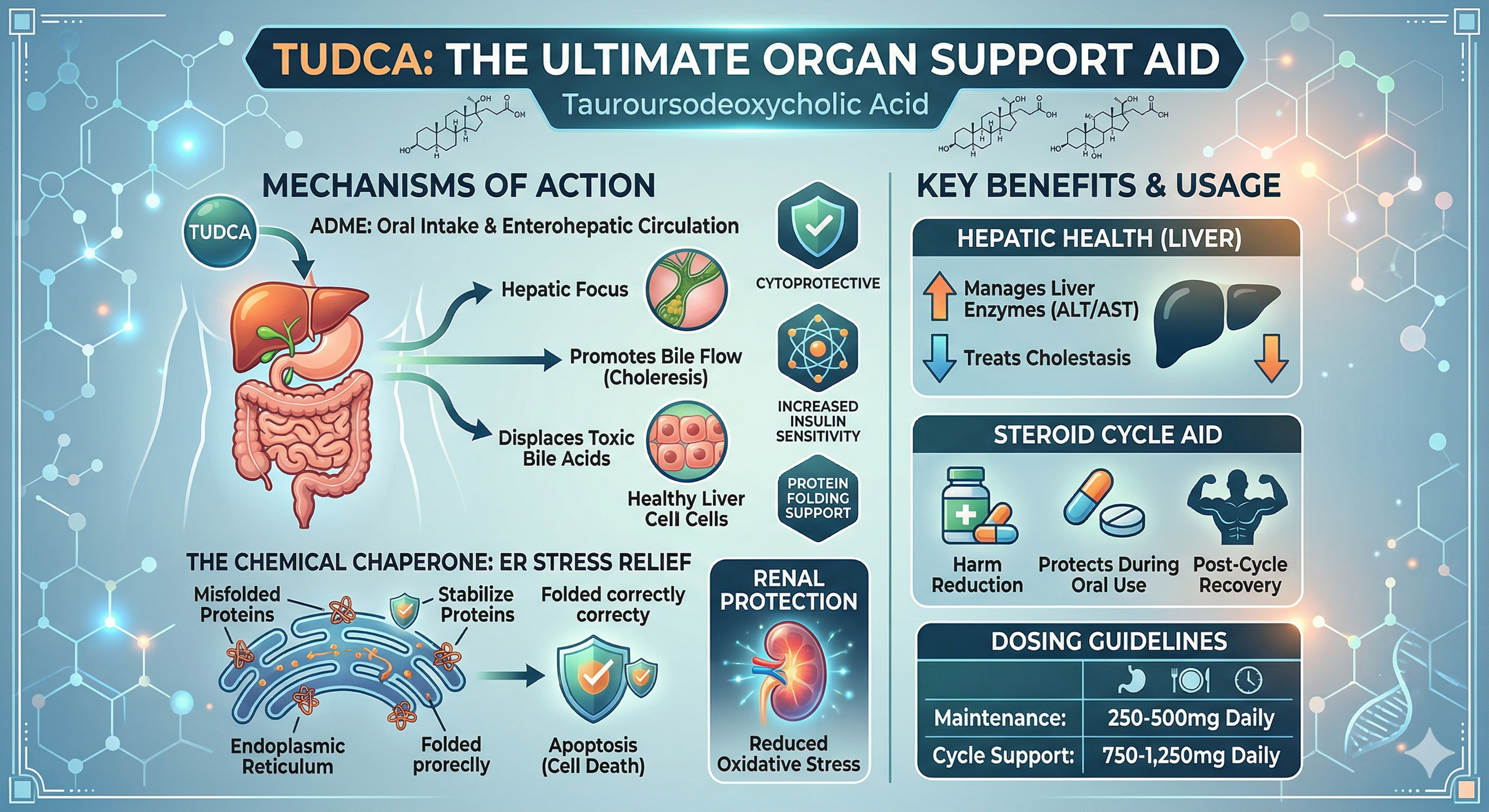
TUDCA (Tauroursodeoxycholic acid) has transitioned from a niche traditional medicine to a cornerstone of modern harm reduction for athletes and those managing metabolic stress. It is a water-soluble bile acid that functions as a potent “chemical chaperone,” protecting cells from the inside out.
What is TUDCA?
TUDCA is the taurine-conjugated form of UDCA (Ursodeoxycholic acid). While the body naturally produces trace amounts, supplemental TUDCA is typically used to overcome “cholestasis”—a condition where bile flow from the liver slows or stops, leading to the accumulation of toxic, fat-soluble bile acids that destroy liver cell membranes.
Mechanism of Action: ADME
Understanding how TUDCA moves through the body explains why it is so effective for the liver but less so for systemic issues without consistent dosing.
- Absorption: Highly bioavailable when taken orally. It enters the “enterohepatic circulation” rapidly.
- Distribution: It is primarily concentrated in the liver and the bile duct system.
- Metabolism: It is resistant to significant breakdown by the liver, allowing it to cycle through the digestive system multiple times.
- Excretion: Primarily via feces, following its path through the bile.
Hepatic and Renal Health
1. Hepatic (Liver) Protection
TUDCA is most famous for its ability to treat cholestasis. When the liver is stressed (by toxins or oral steroids), “bad” bile acids build up and cause apoptosis (cell death). TUDCA competes with these toxic acids, dilutes them, and encourages healthy bile flow.
2. Renal (Kidney) Protection
Recent research suggests TUDCA’s benefits extend to the kidneys. It helps mitigate glomerular injury by reducing oxidative stress and preventing the death of podocytes (cells in the kidney that filter blood). This is particularly relevant for individuals managing high blood pressure or those using substances that increase renal load.
The “Chemical Chaperone”: Protein Misfolding
One of TUDCA’s most unique traits is its role in Endoplasmic Reticulum (ER) stress.
The ER is the “factory” of the cell where proteins are folded. When a cell is under stress, proteins misfold, leading to an inflammatory response and cell death. TUDCA acts as a chemical chaperone, stabilizing these proteins and ensuring they fold correctly. This makes it a potential therapeutic agent for neurodegenerative diseases and metabolic disorders.
Use During Steroid Cycles & Recovery
For the “enhanced” athlete, TUDCA is often considered a non-negotiable health aid.
- During the Cycle: Oral anabolic steroids (C-17 alpha-alkylated) are notorious for causing cholestasis. TUDCA prevents the “backing up” of bile, keeping liver enzymes ($AST$ and $ALT$) within a safer range.
- Post-Cycle Recovery: While TUDCA is usually prioritized during the use of orals, it is useful during recovery to clear any lingering hepatic stress, allowing the liver to process endogenous hormones and medications more efficiently.
- The Conflict with Orals: Some argue that taking TUDCA at the exact same time as an oral steroid might diminish the steroid’s effectiveness by increasing its clearance. To be safe, many athletes split the timing (e.g., Orals AM, TUDCA PM).
Dosing and Administration
Dosing depends heavily on the level of stress being placed on the liver.
| Context | Recommended Daily Dose |
| General Health/Longevity | 250mg – 500mg |
| Active Hepatic Stress (Oral Cycles) | 750mg – 1,000mg |
| Severe Cholestasis | Up to 1,500mg (under supervision) |
Note: TUDCA is best taken on an empty stomach or with a very light meal to ensure it isn’t “competed with” by dietary fats during bile secretion.
Summary
TUDCA is more than just a “liver cleanser.” By protecting the ER and promoting healthy bile flow, it acts as a systemic safeguard against cellular collapse. For anyone putting their metabolic health under significant strain, it is perhaps the single most effective oral supplement for maintaining organ integrity.
At-a-Glance FAQ
What is the primary benefit of TUDCA?
Its main role is cholestasis prevention. It forces the flow of bile, preventing toxic bile acids from building up and destroying liver cells (hepatocytes).
Is TUDCA better than NAC (N-Acetyl Cysteine)?
They are synergistic but serve different roles. NAC boosts glutathione to neutralize toxins, while TUDCA physically clears the “bottleneck” of bile flow and protects the cell’s internal machinery (ER Stress). For maximum protection, many use both.
When is the best time to take it?
Ideally on an empty stomach or 30–60 minutes before a meal. If you are using oral performance enhancers, separate the TUDCA dose from the oral dose by at least 3–4 hours to avoid potential interference with the oral’s absorption.
Are there any side effects?
TUDCA is generally very well-tolerated. However, at high doses (over 1,500mg), some users report diarrhea or loose stools due to the increased bile flow into the digestive tract.
Supplement Protocol Summary
| Metric | Maintenance / General Health | Performance / Cycle Support |
| Daily Dosage | 250mg – 500mg | 750mg – 1,250mg |
| Primary Goal | Insulin sensitivity & kidney health | Liver enzyme (ALT/AST) management |
| Duration | Year-round | Duration of oral use + 2 weeks after |
| Best Paired With | Milk Thistle or NAC | Ubiquinol (CoQ10) and Omega-3s |